
Grey Porcelain Paving

Grey remains the single most requested colour for porcelain paving across the UK, and it’s easy to understand why — grey porcelain slabs offer a neutral, versatile base that suits almost every garden style, from contemporary new-builds to more traditional properties. Whether you’re after a soft, light grey to brighten a shaded corner or a bold charcoal tone to make a statement, Bluebell Landscapes supplies and installs grey porcelain paving in a full range of shades across the Wirral, helping you find the exact tone that suits your outdoor space.

Why Grey Is the Most Popular Porcelain Paving Colour

Grey porcelain paving slabs have overtaken traditional buff and beige tones as the go-to choice for modern UK gardens, and the reasons go beyond simply following a trend:

  • Neutral and versatile — grey works with almost any planting scheme, brickwork colour, or style of outdoor furniture, making it a safe long-term choice as your garden evolves.
  • Hides everyday dirt well — grey porcelain slabs show less dust, pollen, and general grime between cleans compared with lighter colours, keeping the surface looking presentable for longer.
  • Reflects light effectively — lighter grey shades bounce natural light around a garden, which is especially useful for smaller or more shaded plots that can otherwise feel closed-in.
  • Makes gardens feel larger — the light-reflecting, neutral quality of grey porcelain paving is widely used by garden designers specifically to create a sense of space in compact gardens.

Grey also ages predictably. Because the colour is fired through the body rather than applied to the surface, it does not fade under sun or shift tone as the slab weathers, so a grey terrace laid this year still matches an extension laid in five years’ time from the same range.
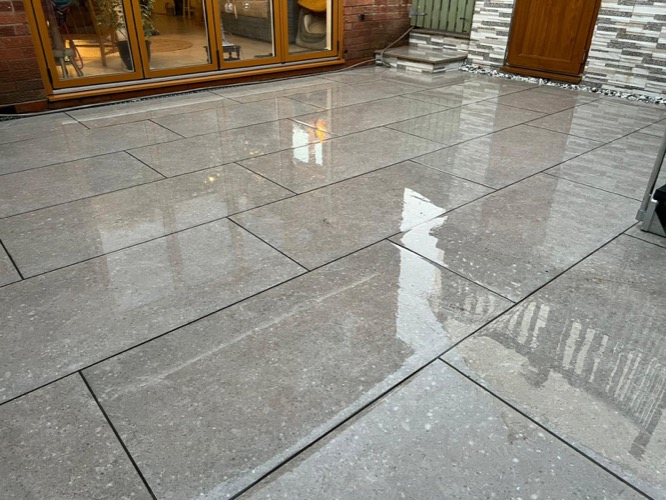
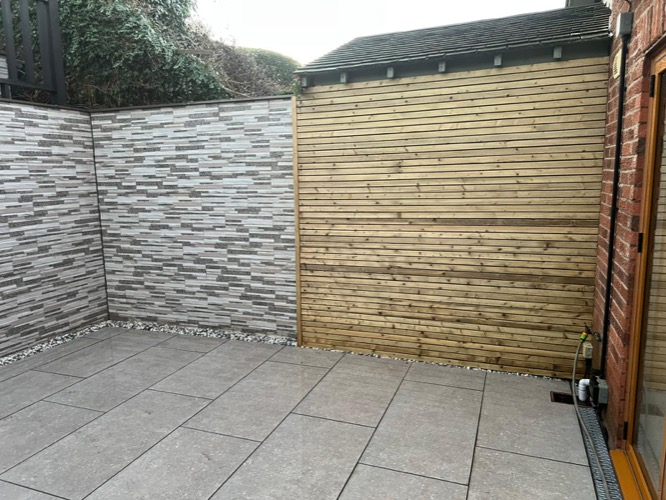
Grey porcelain paving slabs ashton in makerfield
Porcelain grey slabs billinge

Choosing the Right Shade of Grey

Not all grey porcelain paving looks the same, and the right shade depends heavily on your garden’s aspect, existing brickwork, and the overall look you’re going for. As a general rule, lighter grey porcelain paving slabs work best in shaded or north-facing gardens, where they inject brightness that would otherwise be lacking, while mid to darker greys suit sunnier gardens and driveways where too much light reflection can feel overwhelming.

The undertone of your grey also matters more than most homeowners expect. If your property has warm red brickwork, a grey porcelain paving slabs option with subtle warm undertones will blend more naturally than a stark, cool grey, which can look slightly at odds against warmer materials. Conversely, homes with beige brick or darker cladding tend to pair better with cooler-toned greys. For a clean, contemporary finish, a single-tone grey porcelain paving slab with minimal veining or speckling gives the most modern, uniform look, while more heavily patterned or veined greys suit properties going for a softer, more natural aesthetic.

Popular Grey Porcelain Paving Options

The range of grey porcelain paving slabs available today spans from pale, almost silvery greys through to deep, near-black charcoal tones, with plenty of variation in between:

  • Light grey porcelain paving — ideal for brightening shaded gardens and creating a sense of openness in smaller spaces.
  • Mid-grey, textured finishes — currently one of the most requested looks in the UK, offering a premium feel without being too bold, and working well with almost any garden style.
  • Anthracite and deep charcoal grey — a strong, contemporary choice that continues to dominate modern patio design, particularly for properties with anthracite-framed windows or doors.
  • Speckled or quartz-effect greys — designed to mimic natural granite, offering texture and visual interest while remaining a practical, low-maintenance porcelain surface.

Finish matters alongside tone. Riven and textured faces catch shadow and read as warmer, while smoother honed surfaces give a flatter, more contemporary look and reflect more light. Pairing two tones from the same range, one for the main field and one for borders, is an easy way to add definition without introducing a clashing material.

Grey Porcelain Paving Design Trends

Grey porcelain paving continues to lead garden design trends heading into 2026, often used in large-format slabs to minimise grout lines and create a clean, contemporary look. A particularly popular combination pairs grey porcelain paving with dark slate edging or feature wall cladding, adding definition and a sense of craftsmanship to an otherwise simple, neutral surface. Grey also works exceptionally well alongside modern garden features like glass balustrades, black aluminium furniture, and rendered garden walls, giving a cohesive, up-to-date finish that suits contemporary Wirral homes.

Tone choice within the grey range makes a bigger difference than most people expect. Lighter, cooler greys bounce daylight around and suit enclosed or north-facing gardens, while mid and darker greys anchor a space and pair well with rendered walls, timber, and heavy planting. Viewing samples wet as well as dry is worth doing, since grey deepens noticeably in rain.
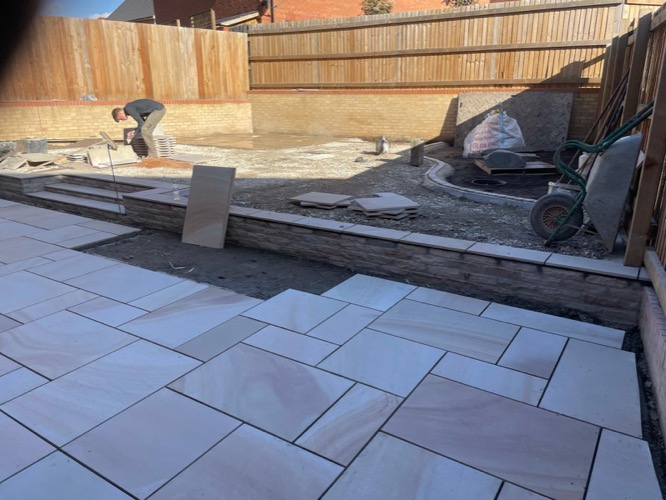
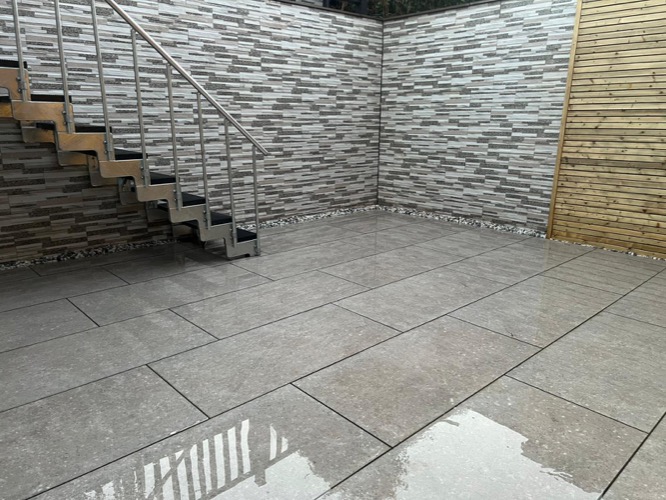
Porcelain paving grey newton le willows
Porcelain paving light grey croft

Installing Grey Porcelain Paving Slabs

Every grey porcelain paving slabs installation we carry out begins with a properly prepared sub-base — a compacted layer of Type 1 MOT aggregate laid with a built-in fall to ensure water drains away rather than pooling on the surface. The slabs are then bedded onto a full mortar bed and checked continuously with a spirit level to keep the surface level and consistent, before being finished with neatly jointed grout lines. This careful approach to groundwork is what keeps grey porcelain paving slabs looking sharp and performing well for years, rather than settling unevenly or developing drainage issues over time.

Slab size affects the groundwork too. Large-format grey slabs are less forgiving of an uneven bed, so the sub-base and mortar layer need to be right across the whole area rather than adjusted slab by slab. That preparation is where most of the installation time goes, and it is the part that determines how the surface performs long term.

  • Compacted Type 1 MOT sub-base with built-in falls
  • Full mortar bed rather than spot-bedding
  • Slurry primer applied to every slab back
  • Wet-cut edges and consistent joint widths

Get Your Grey Porcelain Paving Quote

Bring a modern, low-maintenance finish to your garden with grey porcelain paving from Bluebell Landscapes. From helping you choose the right shade for your property through to expert installation, we handle every part of the process. Contact us today for a tailored quote.

How much does porcelain paving cost?2026-08-03T08:38:20+00:00

UK porcelain paving typically costs £30–£70 per m² for standard ranges and £70–£120+ per m² for premium ranges, with labour adding roughly £80–£120 per m². Since garden size, access, and ground conditions all affect the final figure, Bluebell Landscapes provides a tailored quote based on your specific space rather than a flat rate.tilesandsmilesBluebell-Landscapes.csv

What is the cost of porcelain paving?2026-08-03T08:38:20+00:00

Combined material and labour costs for porcelain paving generally fall between £70 and £190+ per m², depending on slab quality and site preparation. A firm price depends entirely on your garden’s size and condition, which is why every Bluebell Landscapes quote is based on a proper site assessment.pavingshopper+1Bluebell-Landscapes.csv

What is porcelain paving cost per m2?2026-08-03T08:38:20+00:00

Material-only porcelain slabs cost roughly £20–£100 per m² in the UK, with supply-and-fit projects typically landing between £70 and £190+ per m² once labour is included. This range varies widely with groundwork needs, so a genuine per-m² figure for your project comes from a site visit.royalestones.co+1Bluebell-Landscapes.csv

What is the porcelain paving price per m2?2026-08-03T08:38:20+00:00

Porcelain paving price per m² ranges from around £19.55 at the budget end through to £120+ for premium finishes, largely driven by slab thickness, size, and origin. Because every garden differs, Bluebell Landscapes calculates price per m² individually after seeing the space.universalpaving.co+1Bluebell-Landscapes.csv

How much does it cost to lay porcelain paving?2026-08-03T08:38:20+00:00

Labour to lay porcelain paving in the UK typically costs £80–£120 per m² on top of material costs, reflecting the specialist sub-base and jointing work involved. Ground preparation complexity varies from garden to garden, so Bluebell Landscapes prices labour after assessing your site.Bluebell-Landscapes.csvtilesandsmiles

How much does a porcelain patio cost?2026-08-03T08:38:20+00:00

A typical 20m² porcelain patio costs roughly £2,400–£4,400 in total once materials and labour are combined, though this shifts with slab choice and site conditions. Patio shape, size, and existing ground conditions all affect the final price, so Bluebell Landscapes quotes each patio individually.tilesandsmilesBluebell-Landscapes.csv

What is the cost of a porcelain patio?2026-08-03T08:38:20+00:00

Total porcelain patio costs in the UK generally range from £110–£190+ per m² supply-and-fit, varying by tile quality and preparation needs. As no two patios are the same size, Bluebell Landscapes provides a bespoke figure after visiting your garden.pavingshopper+1Bluebell-Landscapes.csv

What is porcelain patio cost per m2?2026-08-03T08:38:20+00:00

Porcelain patios typically cost £110–£190+ per m² installed in the UK, with premium finishes pushing costs higher. This depends heavily on patio size and groundwork, so Bluebell Landscapes assesses each project individually.Bluebell-Landscapes.csvtilesandsmiles+1

How much does a porcelain driveway cost?2026-08-03T08:38:20+00:00

Porcelain driveways generally cost more per m² than patios because they need a stronger sub-base to support vehicle weight, with material prices starting around £20–£100 per m² before labour. Driveway size and current surface condition vary significantly between properties, so Bluebell Landscapes tailors a quote to each driveway.royalestones.coBluebell-Landscapes.csv

How much do porcelain pavers cost?2026-08-03T08:38:20+00:00

Outdoor porcelain pavers cost roughly £20–£100 per m² for materials in the UK, with total installed cost often reaching £70–£190+ per m² once labour is added. Given how much this depends on your outdoor space, Bluebell Landscapes provides a project-specific quote.royalestones.co+1Bluebell-Landscapes.csv

What is the cost of porcelain pavers?2026-08-03T08:38:20+00:00

Porcelain paver costs vary by slab thickness, finish, and the groundwork your space requires, generally landing between £70 and £190+ per m² installed. An accurate figure depends on your garden’s size and layout, best confirmed on-site.pavingshopperBluebell-Landscapes.csv

What is porcelain pavers price?2026-08-03T08:38:20+00:00

Porcelain paver prices range from about £20 per m² for budget material-only options up to £120+ per m² for premium ranges. Bluebell Landscapes quotes based on your specific project rather than a generic rate.universalpaving.co+1Bluebell-Landscapes.csv

What is porcelain pavers cost per square foot?2026-08-03T08:38:20+00:00

Converting UK per-m² pricing, porcelain pavers cost roughly £2–£11 per square foot for materials, translating to about £6.50–£17.60 per square foot installed. Because pricing depends on total area and site prep, Bluebell Landscapes calculates this after seeing your garden.Bluebell-Landscapes.csvpavingshopper

What is the best price for porcelain paving?2026-08-03T08:38:20+00:00

The best price comes from comparing full supply-and-fit quotes rather than material cost alone, since installation quality significantly affects long-term durability. Bluebell Landscapes provides a complete, itemised quote so you can see exactly what’s included.londonstone.coBluebell-Landscapes.csv

What are porcelain paving prices?2026-08-03T08:38:20+00:00

Porcelain paving prices in the UK span from around £19.55 per m² at the budget end to £120+ per m² for premium ranges, plus £80–£120 per m² labour. Since prices vary by project, Bluebell Landscapes assesses your garden before confirming a figure.universalpaving.co+1Bluebell-Landscapes.csv

How do you lay porcelain slabs?2026-08-03T08:38:20+00:00

Porcelain slabs are typically laid on a full mortar bed or specialist adhesive over a properly prepared sub-base, with joint spacing of 3–10mm recommended for outdoor use. Professional installation is strongly recommended over DIY, since incorrect sub-base preparation is one of the most common causes of later problems.naturalstoneandtimber

Is a porcelain paving installer necessary, or can it be a DIY job?2026-08-03T08:38:20+00:00

While it’s possible to lay porcelain paving yourself, manufacturers generally recommend professional installation due to the precision needed in sub-base preparation and jointing. A qualified installer like Bluebell Landscapes ensures the groundwork, drainage falls, and joint spacing meet manufacturer specifications for long-term performance.milesstone.coBluebell-Landscapes.csv

Is porcelain paving slippery?2026-08-03T08:38:20+00:00

Outdoor porcelain paving is manufactured with anti-slip textured surfaces rated using the R-value system (R9 to R13), making it less slippery than many other paving materials when properly specified. This makes it a safe choice for the UK’s wet climate, including around pools and high-traffic patio areas.rubi

Does porcelain paving scratch or stain?2026-08-03T08:38:20+00:00

Porcelain paving is highly resistant to scratching and staining due to its dense, non-porous surface, which prevents spills and dirt from penetrating the material. This also means it resists mould and mildew, keeping patios looking newer for longer with minimal cleaning.rubi

Can porcelain paving withstand UK weather?2026-08-03T08:38:20+00:00

Yes — porcelain paving is frost-resistant, UV-resistant, and handles thermal expansion well, making it well-suited to the UK’s mix of rain, frost, and occasional heat. Its low water absorption rate (under 0.5%) prevents the freeze-thaw cracking that can affect other paving materials.

Where we are

Go to Top