
Beige Porcelain Paving

Beige porcelain paving offers a warmer, softer alternative to the greys and darker tones that dominate much of the modern paving market, bringing a cosy, inviting feel to outdoor spaces that suits a huge range of garden styles. Its soft, earthy tone works particularly well against traditional brickwork and natural stone features, making it a popular choice for homeowners across the Wirral who want their garden to feel warm and welcoming rather than stark or clinical. Bluebell Landscapes supplies and installs beige and cream porcelain paving slabs suited to both classic and contemporary properties.

Why Beige and Cream Porcelain Paving Works So Well

Warm-toned porcelain paving has genuinely grown in popularity again in recent years, and there are clear practical and aesthetic reasons behind the trend:

  • Softens and warms a space — beige porcelain paving adds a natural, almost Mediterranean feel to a garden, particularly valuable in shaded or north-facing spaces that can otherwise feel cold or flat.
  • Complements traditional brickwork — the warm undertones in beige and cream porcelain slabs pair naturally with red or orange brick, something cooler grey tones can sometimes clash with.
  • Brightens without dazzling — in a sunny spot, beige draws in warmth without the harsh glare that pure white or cream can sometimes create, striking a useful middle ground.
  • Suits both traditional and contemporary designs — unlike some bolder colour choices, beige porcelain paving slabs work equally well in cottage-style gardens and more modern properties, giving it broader long-term appeal.
  • Full porcelain performance — beige and cream porcelain paving delivers exactly the same frost resistance, stain resistance, and low-maintenance durability as any other porcelain colourway.

Warm tones also sit comfortably alongside brick and sandstone, which makes them a natural fit for period properties and gardens where the paving needs to relate to existing walls rather than contrast with them. Grey can look imposed in that setting; beige tends to look like it belongs.

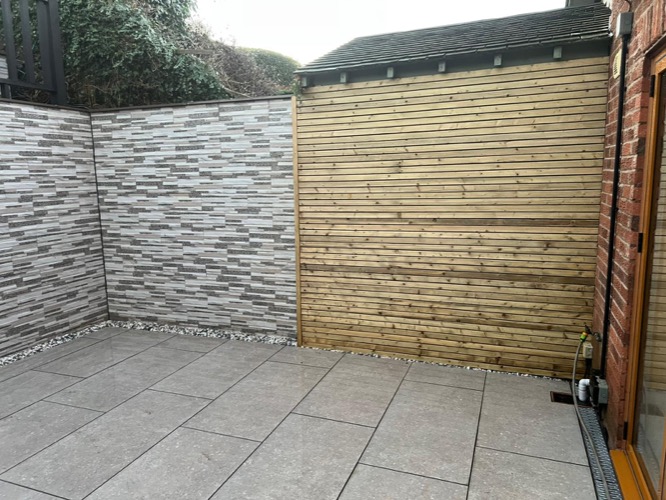
Cream porcelain paving skelmersdale
Beige porcelain patio widnes

Beige, Cream, or Buff: Understanding the Differences

The terms beige, cream, and buff are often used almost interchangeably in the paving industry, but there are subtle distinctions worth knowing when choosing your porcelain garden slabs. Cream porcelain paving tends to sit at the lighter, almost ivory end of the spectrum, offering a bright, airy feel similar to white but with a touch more warmth. Buff and beige tones sit slightly deeper, often with subtle honey or golden undertones that give a more traditional, timeworn character reminiscent of natural sandstone. Some ranges also include gentle veining or mottling to mimic the natural variation found in real stone, adding texture and visual interest without sacrificing porcelain’s practical benefits.

The practical implication is that samples matter more in this range than in any other. Two slabs both sold as beige can sit noticeably apart in tone, and the difference is far more obvious across a whole patio than on a single sample board. We recommend viewing options outdoors in natural daylight before committing to a range.

  • Cream sits at the lightest end of the range
  • Beige carries a warmer, more neutral tone
  • Buff leans further toward sandy and golden shades
  • Tone shifts noticeably between wet and dry

Choosing the Right Warm Tone for Your Garden

As with any porcelain paving colour choice, the right shade of beige or cream depends on your garden’s aspect and existing features. A paler cream or ivory porcelain paving slabs option works well in gardens that already get plenty of natural light, helping create a bright, open feel without appearing stark. In shadier gardens, a slightly deeper beige or buff tone can inject warmth that would otherwise be missing, without needing to rely on direct sunlight to feel inviting.

If your property has traditional red or orange brickwork, beige porcelain paving slabs will generally blend more naturally than a cooler grey, since the warm undertones complement rather than contrast with the existing material. For cottage-style gardens with soft planting like foxgloves and daisies, warmer sand and buff tones tend to suit the overall character of the space particularly well.

Design Ideas for Beige and Cream Porcelain Paving

Beige porcelain patio slabs pair beautifully with timber decking, rattan or wicker furniture, and traditional planting schemes, reinforcing the warm, relaxed feel the colour naturally brings. A popular design approach combines beige or cream porcelain with a contrasting white or lighter cream border, emphasising the material’s warmth while adding a touch of definition to the overall layout. For a more contemporary take, beige porcelain garden paving can be paired with dark grey grout and modern outdoor furniture, giving a softer alternative to the more common all-grey garden design.

Warm tones are also forgiving in practical terms. Fine dust, dry soil, and sand blown across the surface show far less on a beige slab than on grey or white, which makes the range a sensible choice for gardens with gravel areas, borders that spill onto the paving, or heavy everyday use.

Beige porcelain slabs eccleston
Porcelain paving beige runcorn

Installing Beige and Cream Porcelain Paving

Every beige porcelain patio we install begins with correct sub-base preparation — a properly compacted Type 1 MOT aggregate layer with built-in drainage falls — followed by a full mortar bed installation and precise jointing. Getting this groundwork right matters just as much for beige and cream porcelain paving as any other colour, ensuring the surface stays level, secure, and keeps its warm tone through UK seasons.

Consistency of shade across a delivery is worth checking before laying begins. Because these tones are naturally varied, we mix slabs across pallets during installation rather than working through one pallet at a time, which avoids visible banding where a batch changes.

  • Compacted Type 1 MOT sub-base with built-in falls
  • Slabs mixed across pallets to avoid tonal banding
  • Full mortar bed installation throughout
  • Joints finished to a consistent width and colour

Bring Warmth to Your Garden

Choose beige or cream porcelain paving from Bluebell Landscapes for a classic, welcoming garden finish that suits both traditional and contemporary properties. Contact us today for a tailored quote and expert colour advice for your space.

How much does porcelain paving cost?2026-08-03T08:38:20+00:00

UK porcelain paving typically costs £30–£70 per m² for standard ranges and £70–£120+ per m² for premium ranges, with labour adding roughly £80–£120 per m². Since garden size, access, and ground conditions all affect the final figure, Bluebell Landscapes provides a tailored quote based on your specific space rather than a flat rate.tilesandsmilesBluebell-Landscapes.csv

What is the cost of porcelain paving?2026-08-03T08:38:20+00:00

Combined material and labour costs for porcelain paving generally fall between £70 and £190+ per m², depending on slab quality and site preparation. A firm price depends entirely on your garden’s size and condition, which is why every Bluebell Landscapes quote is based on a proper site assessment.pavingshopper+1Bluebell-Landscapes.csv

What is porcelain paving cost per m2?2026-08-03T08:38:20+00:00

Material-only porcelain slabs cost roughly £20–£100 per m² in the UK, with supply-and-fit projects typically landing between £70 and £190+ per m² once labour is included. This range varies widely with groundwork needs, so a genuine per-m² figure for your project comes from a site visit.royalestones.co+1Bluebell-Landscapes.csv

What is the porcelain paving price per m2?2026-08-03T08:38:20+00:00

Porcelain paving price per m² ranges from around £19.55 at the budget end through to £120+ for premium finishes, largely driven by slab thickness, size, and origin. Because every garden differs, Bluebell Landscapes calculates price per m² individually after seeing the space.universalpaving.co+1Bluebell-Landscapes.csv

How much does it cost to lay porcelain paving?2026-08-03T08:38:20+00:00

Labour to lay porcelain paving in the UK typically costs £80–£120 per m² on top of material costs, reflecting the specialist sub-base and jointing work involved. Ground preparation complexity varies from garden to garden, so Bluebell Landscapes prices labour after assessing your site.Bluebell-Landscapes.csvtilesandsmiles

How much does a porcelain patio cost?2026-08-03T08:38:20+00:00

A typical 20m² porcelain patio costs roughly £2,400–£4,400 in total once materials and labour are combined, though this shifts with slab choice and site conditions. Patio shape, size, and existing ground conditions all affect the final price, so Bluebell Landscapes quotes each patio individually.tilesandsmilesBluebell-Landscapes.csv

What is the cost of a porcelain patio?2026-08-03T08:38:20+00:00

Total porcelain patio costs in the UK generally range from £110–£190+ per m² supply-and-fit, varying by tile quality and preparation needs. As no two patios are the same size, Bluebell Landscapes provides a bespoke figure after visiting your garden.pavingshopper+1Bluebell-Landscapes.csv

What is porcelain patio cost per m2?2026-08-03T08:38:20+00:00

Porcelain patios typically cost £110–£190+ per m² installed in the UK, with premium finishes pushing costs higher. This depends heavily on patio size and groundwork, so Bluebell Landscapes assesses each project individually.Bluebell-Landscapes.csvtilesandsmiles+1

How much does a porcelain driveway cost?2026-08-03T08:38:20+00:00

Porcelain driveways generally cost more per m² than patios because they need a stronger sub-base to support vehicle weight, with material prices starting around £20–£100 per m² before labour. Driveway size and current surface condition vary significantly between properties, so Bluebell Landscapes tailors a quote to each driveway.royalestones.coBluebell-Landscapes.csv

How much do porcelain pavers cost?2026-08-03T08:38:20+00:00

Outdoor porcelain pavers cost roughly £20–£100 per m² for materials in the UK, with total installed cost often reaching £70–£190+ per m² once labour is added. Given how much this depends on your outdoor space, Bluebell Landscapes provides a project-specific quote.royalestones.co+1Bluebell-Landscapes.csv

What is the cost of porcelain pavers?2026-08-03T08:38:20+00:00

Porcelain paver costs vary by slab thickness, finish, and the groundwork your space requires, generally landing between £70 and £190+ per m² installed. An accurate figure depends on your garden’s size and layout, best confirmed on-site.pavingshopperBluebell-Landscapes.csv

What is porcelain pavers price?2026-08-03T08:38:20+00:00

Porcelain paver prices range from about £20 per m² for budget material-only options up to £120+ per m² for premium ranges. Bluebell Landscapes quotes based on your specific project rather than a generic rate.universalpaving.co+1Bluebell-Landscapes.csv

What is porcelain pavers cost per square foot?2026-08-03T08:38:20+00:00

Converting UK per-m² pricing, porcelain pavers cost roughly £2–£11 per square foot for materials, translating to about £6.50–£17.60 per square foot installed. Because pricing depends on total area and site prep, Bluebell Landscapes calculates this after seeing your garden.Bluebell-Landscapes.csvpavingshopper

What is the best price for porcelain paving?2026-08-03T08:38:20+00:00

The best price comes from comparing full supply-and-fit quotes rather than material cost alone, since installation quality significantly affects long-term durability. Bluebell Landscapes provides a complete, itemised quote so you can see exactly what’s included.londonstone.coBluebell-Landscapes.csv

What are porcelain paving prices?2026-08-03T08:38:20+00:00

Porcelain paving prices in the UK span from around £19.55 per m² at the budget end to £120+ per m² for premium ranges, plus £80–£120 per m² labour. Since prices vary by project, Bluebell Landscapes assesses your garden before confirming a figure.universalpaving.co+1Bluebell-Landscapes.csv

How do you lay porcelain slabs?2026-08-03T08:38:20+00:00

Porcelain slabs are typically laid on a full mortar bed or specialist adhesive over a properly prepared sub-base, with joint spacing of 3–10mm recommended for outdoor use. Professional installation is strongly recommended over DIY, since incorrect sub-base preparation is one of the most common causes of later problems.naturalstoneandtimber

Is a porcelain paving installer necessary, or can it be a DIY job?2026-08-03T08:38:20+00:00

While it’s possible to lay porcelain paving yourself, manufacturers generally recommend professional installation due to the precision needed in sub-base preparation and jointing. A qualified installer like Bluebell Landscapes ensures the groundwork, drainage falls, and joint spacing meet manufacturer specifications for long-term performance.milesstone.coBluebell-Landscapes.csv

Is porcelain paving slippery?2026-08-03T08:38:20+00:00

Outdoor porcelain paving is manufactured with anti-slip textured surfaces rated using the R-value system (R9 to R13), making it less slippery than many other paving materials when properly specified. This makes it a safe choice for the UK’s wet climate, including around pools and high-traffic patio areas.rubi

Does porcelain paving scratch or stain?2026-08-03T08:38:20+00:00

Porcelain paving is highly resistant to scratching and staining due to its dense, non-porous surface, which prevents spills and dirt from penetrating the material. This also means it resists mould and mildew, keeping patios looking newer for longer with minimal cleaning.rubi

Can porcelain paving withstand UK weather?2026-08-03T08:38:20+00:00

Yes — porcelain paving is frost-resistant, UV-resistant, and handles thermal expansion well, making it well-suited to the UK’s mix of rain, frost, and occasional heat. Its low water absorption rate (under 0.5%) prevents the freeze-thaw cracking that can affect other paving materials.

Where we are

Go to Top