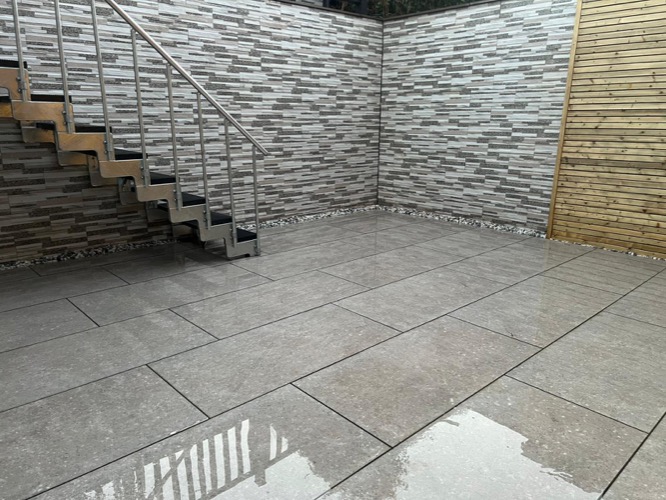
Anthracite Porcelain Paving

Anthracite porcelain paving has become one of the defining looks in modern British garden design, offering a bold, sophisticated alternative to the softer greys and beiges that have traditionally dominated UK patios. Its deep, smoky charcoal tones create a striking sense of contrast against greenery, rendered walls, and contemporary outdoor furniture, making it a popular choice for homeowners across the Wirral who want their garden to feel genuinely designed rather than simply paved. Bluebell Landscapes supplies and installs anthracite and black porcelain paving slabs, bringing the same careful attention to groundwork and finish that every porcelain installation demands.

What Makes Anthracite Porcelain Paving Different

Anthracite sits between mid-grey and true black on the colour spectrum, typically described as a smoky blend of charcoal and beige, often finished with subtle veining or lighter markings that give it a more natural, stone-like appearance than a flat, uniform black. This makes anthracite porcelain paving slabs feel less stark than pure black while still delivering that same bold, contemporary impact — a distinction that matters when choosing between anthracite grey porcelain paving and true black options for your garden.

True black porcelain paving, by contrast, offers an even more dramatic, high-contrast finish, often described as bringing “modern elegance” and “high-end glamour” to outdoor spaces, particularly around features like alfresco dining areas or poolside lounges. Both options share the same underlying porcelain performance benefits — the choice between them really comes down to how bold a statement you want your paving to make.

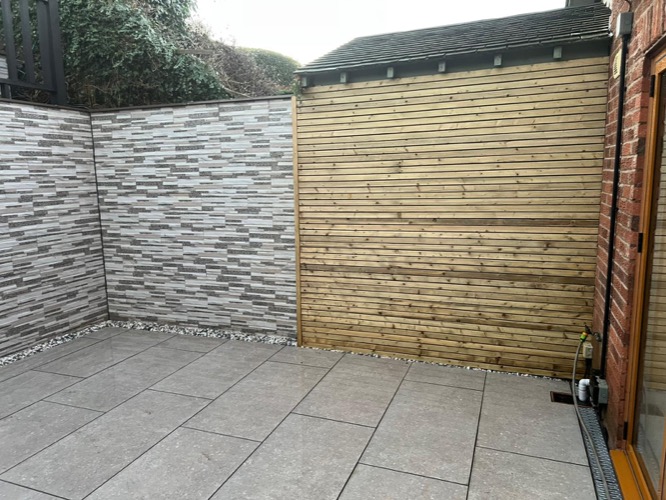
Anthracite grey porcelain paving widnes
Black porcelain paving slabs runcorn

The Case for Choosing Dark Porcelain Paving

Dark paving slabs, whether anthracite or black, come with a specific set of practical and aesthetic advantages worth considering:

  • Shows less everyday dirt — darker tones hide dust, pollen, and general grime far better than lighter shades, meaning less frequent cleaning to keep the surface looking sharp.
  • Creates a restful, grounded feel — in brightly lit gardens, dark grey or anthracite porcelain paving absorbs some of the light, making the space feel calmer rather than glaring.
  • Pairs beautifully with greenery — the deep, neutral tone of anthracite porcelain paving lets planting and colourful furnishings stand out, acting as a backdrop rather than competing for attention.
  • Complements contemporary architecture — anthracite porcelain slabs work particularly well alongside anthracite-framed windows and doors, timber decking, glass balustrades, and rendered walls, tying a modern extension or new-build together.

Dark tones do absorb more heat in direct sun, which is worth knowing if the area is used barefoot in summer or by pets. In a shaded or partially covered space this is rarely noticeable, and in an open south-facing garden it can be managed by breaking the surface with planting, pergolas, or a lighter border course.

Things to Consider Before Choosing Dark Porcelain

Dark porcelain paving isn’t the right fit for every garden, and it’s worth being upfront about a couple of practical considerations. In shaded areas with heavy overhead foliage, dark grey or black paving can occasionally make a space feel a little gloomier or damper-looking than lighter alternatives, so it tends to work best in gardens that get a reasonable amount of natural light. Dark colours also absorb more heat than lighter shades, meaning anthracite or black porcelain paving can feel warmer underfoot on hot summer days — a smoother, less textured finish will feel warmer than a textured one, so this is worth factoring in if the area gets a lot of direct sun.

One other point worth knowing: dark porcelain shows bird droppings and light-coloured debris more noticeably than it hides dust and dirt, so if your garden sits near trees frequented by birds, this is a minor but genuine consideration.

Design Ideas for Anthracite and Black Porcelain Paving

Anthracite porcelain paving works particularly well in large-format slabs, minimising grout lines to create a sleek, uninterrupted surface that increases the sense of space in a garden or courtyard. Pairing anthracite porcelain slabs with matching dark grout gives the most seamless, monochromatic look, while a lighter grout can be used to add subtle definition and highlight the individual slab layout if you prefer a more structured appearance. For a striking design feature, anthracite paving is often combined with a lighter grey or quartz white porcelain border to create contrast and define distinct zones within a garden, such as separating a dining area from a lawn.

Balance is worth thinking about carefully with darker tones. Anthracite absorbs light rather than reflecting it, so a small, enclosed, or heavily shaded garden can end up feeling closed in if the entire surface is dark. Breaking the run with lighter border courses, pale gravel, or generous planting keeps the drama without losing the sense of space.

  • Large-format slabs to minimise joint lines
  • Lighter border courses to frame darker areas
  • Pairs well with timber, render and clipped greenery
  • Strong contrast against pale walls and furniture
  • Works particularly well around water features
Black porcelain paving skelmersdale
Porcelain paving anthracite great sankey

Installing Anthracite and Black Porcelain Paving

We install every anthracite grey porcelain paving project with the same careful sub-base preparation and precision jointing used across our full porcelain paving range — a properly compacted Type 1 MOT aggregate base, correct drainage falls, and a full mortar bed to keep the surface level and secure. Because anthracite and black porcelain slabs are manufactured to the same high tolerances as lighter porcelain ranges, they offer the same durability, frost resistance, and low-maintenance performance, just in a bolder finish.

Darker surfaces show installation errors more readily than pale ones, so setting out and jointing need to be precise. Any variation in level catches the light and becomes visible across a dark surface, and inconsistent joint widths stand out more sharply against the deeper tone. We set out the full layout before laying begins rather than working it out as we go.

  • Compacted Type 1 MOT sub-base with drainage falls
  • Full mortar bed and slurry primer throughout
  • Layout set out fully before laying begins
  • Consistent joint widths across the whole surface

Create a Bold New Look

Add contemporary style and genuine kerb appeal to your garden with anthracite or black porcelain paving from Bluebell Landscapes. Contact us today for a tailored quote and expert advice on the right dark porcelain finish for your space.

How much does porcelain paving cost?2026-08-03T08:38:20+00:00

UK porcelain paving typically costs £30–£70 per m² for standard ranges and £70–£120+ per m² for premium ranges, with labour adding roughly £80–£120 per m². Since garden size, access, and ground conditions all affect the final figure, Bluebell Landscapes provides a tailored quote based on your specific space rather than a flat rate.tilesandsmilesBluebell-Landscapes.csv

What is the cost of porcelain paving?2026-08-03T08:38:20+00:00

Combined material and labour costs for porcelain paving generally fall between £70 and £190+ per m², depending on slab quality and site preparation. A firm price depends entirely on your garden’s size and condition, which is why every Bluebell Landscapes quote is based on a proper site assessment.pavingshopper+1Bluebell-Landscapes.csv

What is porcelain paving cost per m2?2026-08-03T08:38:20+00:00

Material-only porcelain slabs cost roughly £20–£100 per m² in the UK, with supply-and-fit projects typically landing between £70 and £190+ per m² once labour is included. This range varies widely with groundwork needs, so a genuine per-m² figure for your project comes from a site visit.royalestones.co+1Bluebell-Landscapes.csv

What is the porcelain paving price per m2?2026-08-03T08:38:20+00:00

Porcelain paving price per m² ranges from around £19.55 at the budget end through to £120+ for premium finishes, largely driven by slab thickness, size, and origin. Because every garden differs, Bluebell Landscapes calculates price per m² individually after seeing the space.universalpaving.co+1Bluebell-Landscapes.csv

How much does it cost to lay porcelain paving?2026-08-03T08:38:20+00:00

Labour to lay porcelain paving in the UK typically costs £80–£120 per m² on top of material costs, reflecting the specialist sub-base and jointing work involved. Ground preparation complexity varies from garden to garden, so Bluebell Landscapes prices labour after assessing your site.Bluebell-Landscapes.csvtilesandsmiles

How much does a porcelain patio cost?2026-08-03T08:38:20+00:00

A typical 20m² porcelain patio costs roughly £2,400–£4,400 in total once materials and labour are combined, though this shifts with slab choice and site conditions. Patio shape, size, and existing ground conditions all affect the final price, so Bluebell Landscapes quotes each patio individually.tilesandsmilesBluebell-Landscapes.csv

What is the cost of a porcelain patio?2026-08-03T08:38:20+00:00

Total porcelain patio costs in the UK generally range from £110–£190+ per m² supply-and-fit, varying by tile quality and preparation needs. As no two patios are the same size, Bluebell Landscapes provides a bespoke figure after visiting your garden.pavingshopper+1Bluebell-Landscapes.csv

What is porcelain patio cost per m2?2026-08-03T08:38:20+00:00

Porcelain patios typically cost £110–£190+ per m² installed in the UK, with premium finishes pushing costs higher. This depends heavily on patio size and groundwork, so Bluebell Landscapes assesses each project individually.Bluebell-Landscapes.csvtilesandsmiles+1

How much does a porcelain driveway cost?2026-08-03T08:38:20+00:00

Porcelain driveways generally cost more per m² than patios because they need a stronger sub-base to support vehicle weight, with material prices starting around £20–£100 per m² before labour. Driveway size and current surface condition vary significantly between properties, so Bluebell Landscapes tailors a quote to each driveway.royalestones.coBluebell-Landscapes.csv

How much do porcelain pavers cost?2026-08-03T08:38:20+00:00

Outdoor porcelain pavers cost roughly £20–£100 per m² for materials in the UK, with total installed cost often reaching £70–£190+ per m² once labour is added. Given how much this depends on your outdoor space, Bluebell Landscapes provides a project-specific quote.royalestones.co+1Bluebell-Landscapes.csv

What is the cost of porcelain pavers?2026-08-03T08:38:20+00:00

Porcelain paver costs vary by slab thickness, finish, and the groundwork your space requires, generally landing between £70 and £190+ per m² installed. An accurate figure depends on your garden’s size and layout, best confirmed on-site.pavingshopperBluebell-Landscapes.csv

What is porcelain pavers price?2026-08-03T08:38:20+00:00

Porcelain paver prices range from about £20 per m² for budget material-only options up to £120+ per m² for premium ranges. Bluebell Landscapes quotes based on your specific project rather than a generic rate.universalpaving.co+1Bluebell-Landscapes.csv

What is porcelain pavers cost per square foot?2026-08-03T08:38:20+00:00

Converting UK per-m² pricing, porcelain pavers cost roughly £2–£11 per square foot for materials, translating to about £6.50–£17.60 per square foot installed. Because pricing depends on total area and site prep, Bluebell Landscapes calculates this after seeing your garden.Bluebell-Landscapes.csvpavingshopper

What is the best price for porcelain paving?2026-08-03T08:38:20+00:00

The best price comes from comparing full supply-and-fit quotes rather than material cost alone, since installation quality significantly affects long-term durability. Bluebell Landscapes provides a complete, itemised quote so you can see exactly what’s included.londonstone.coBluebell-Landscapes.csv

What are porcelain paving prices?2026-08-03T08:38:20+00:00

Porcelain paving prices in the UK span from around £19.55 per m² at the budget end to £120+ per m² for premium ranges, plus £80–£120 per m² labour. Since prices vary by project, Bluebell Landscapes assesses your garden before confirming a figure.universalpaving.co+1Bluebell-Landscapes.csv

How do you lay porcelain slabs?2026-08-03T08:38:20+00:00

Porcelain slabs are typically laid on a full mortar bed or specialist adhesive over a properly prepared sub-base, with joint spacing of 3–10mm recommended for outdoor use. Professional installation is strongly recommended over DIY, since incorrect sub-base preparation is one of the most common causes of later problems.naturalstoneandtimber

Is a porcelain paving installer necessary, or can it be a DIY job?2026-08-03T08:38:20+00:00

While it’s possible to lay porcelain paving yourself, manufacturers generally recommend professional installation due to the precision needed in sub-base preparation and jointing. A qualified installer like Bluebell Landscapes ensures the groundwork, drainage falls, and joint spacing meet manufacturer specifications for long-term performance.milesstone.coBluebell-Landscapes.csv

Is porcelain paving slippery?2026-08-03T08:38:20+00:00

Outdoor porcelain paving is manufactured with anti-slip textured surfaces rated using the R-value system (R9 to R13), making it less slippery than many other paving materials when properly specified. This makes it a safe choice for the UK’s wet climate, including around pools and high-traffic patio areas.rubi

Does porcelain paving scratch or stain?2026-08-03T08:38:20+00:00

Porcelain paving is highly resistant to scratching and staining due to its dense, non-porous surface, which prevents spills and dirt from penetrating the material. This also means it resists mould and mildew, keeping patios looking newer for longer with minimal cleaning.rubi

Can porcelain paving withstand UK weather?2026-08-03T08:38:20+00:00

Yes — porcelain paving is frost-resistant, UV-resistant, and handles thermal expansion well, making it well-suited to the UK’s mix of rain, frost, and occasional heat. Its low water absorption rate (under 0.5%) prevents the freeze-thaw cracking that can affect other paving materials.

Where we are

Go to Top