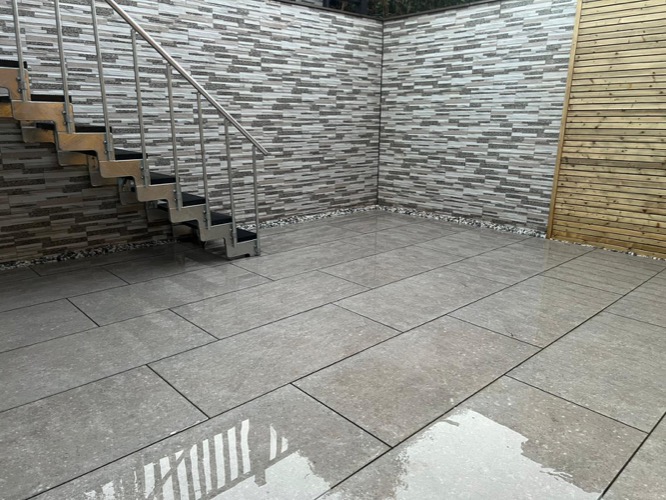
Porcelain Tiles Garden

Porcelain tiles garden paving has transformed how homeowners across the Wirral approach their outdoor spaces, offering a clean, contemporary finish that works just as well for paths and borders as it does for full patio areas. Whether you’re framing a planting bed, connecting different zones of the garden, or replacing tired old slabs, garden porcelain paving gives you a versatile, long-lasting surface that copes with everything a British garden throws at it. Bluebell Landscapes designs and installs garden porcelain slabs tailored specifically to your plot, taking into account its shape, existing planting, and how you actually use the space.

Why Porcelain Works So Well in Garden Settings

Gardens present a different set of challenges to a simple patio — uneven ground, root systems, planting beds, and changing light throughout the day all play a part in how a surface performs and looks over time. Porcelain garden slabs handle these conditions particularly well thanks to a few key properties:

  • Non-porous surface — garden porcelain paving resists staining from soil, mulch, and plant matter that can otherwise mark more porous materials.
  • Weed and moss resistance — because porcelain doesn’t absorb moisture, it’s far less hospitable to moss and weed growth in the joints compared with natural stone, provided joints are properly filled during installation.
  • Colour retention in shade or sun — UV-stable pigmentation means porcelain tiles garden paving keeps its colour whether it’s positioned under a tree canopy or in full afternoon sun.
  • Design flexibility for planting schemes — the wide range of finishes, from stone-effect to timber-plank styles, means garden porcelain slabs can be chosen to complement almost any planting style, from cottage gardens to contemporary minimalist designs.

Light behaves differently across a garden through the day, and a slab that looks right against a sunlit wall can read quite differently in shade under planting. Viewing samples in position, at the time of day the space is actually used, avoids the most common regret on colour choice.
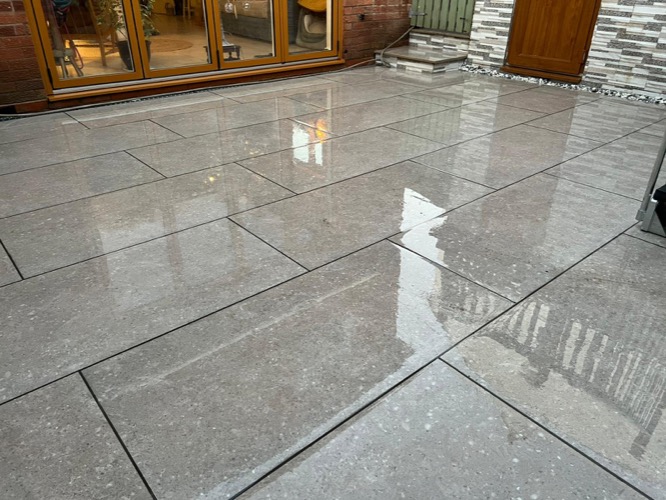
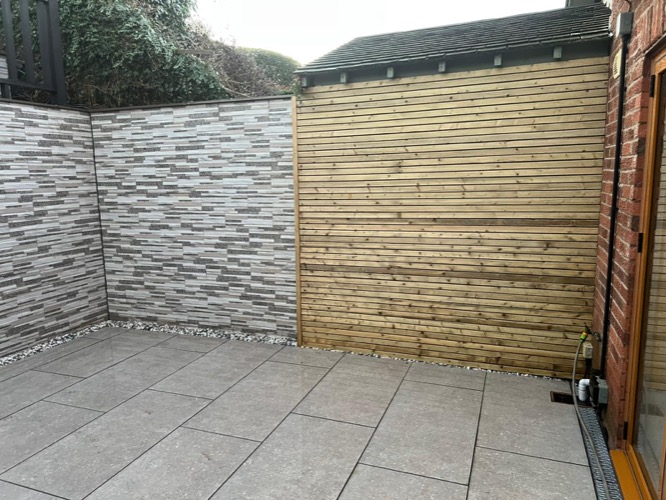
Garden porcelain slabs billinge
Porcelain slabs for garden croft

Popular Garden Porcelain Paving Layouts

One of the appealing things about porcelain garden paving is how adaptable it is to different garden layouts and design styles. Garden designers frequently use large-format porcelain garden paving slabs to create a seamless, uncluttered look, minimising the number of grout lines and making smaller gardens feel more spacious. For gardens with more traditional planting, mixed-colour or subtly veined porcelain tiles garden options can mimic the natural, rustic look of real stone while still delivering porcelain’s practical benefits.

Porcelain garden slabs are also increasingly used to create pathways and stepping-stone trails that guide visitors through planting areas, tying different parts of a garden together into a cohesive design. Combining porcelain garden paving slabs with wooden sleepers, gravel borders, or grass strips between individual slabs is a popular way to soften the modern look of porcelain and blend it more naturally into a planted garden.

Choosing the Right Colour and Finish

Grey remains the most popular colour choice for garden porcelain paving in the UK, ranging from light silver-grey through to darker charcoal tones, and it pairs particularly well with greenery, rendered garden walls, and contemporary planters. Beige and cream porcelain garden slabs suit more traditional garden styles, complementing brick garden walls and natural stone features, while bolder anthracite or black porcelain tiles garden options create striking contrast against lighter planting and furniture.

Bluebell Landscapes talks through these options with every customer, taking cues from your existing garden features — brickwork, fencing, planting colour schemes — to recommend a porcelain garden paving slabs finish that will genuinely suit the space, not just look good in isolation.

Installing Porcelain Garden Slabs the Right Way

Garden installations often come with extra complications compared with a straightforward patio — tree roots, drainage from adjacent lawns, and uneven original ground levels all need to be factored in. We prepare a solid, well-compacted sub-base for every garden porcelain paving slabs project, building in the correct drainage falls so that water moves away from planting beds and the house rather than pooling on the new surface. Getting this groundwork right is what keeps a garden porcelain slabs installation looking level and performing well for years, rather than settling unevenly or developing drainage problems down the line.

Levels are the detail most often rushed. A garden surface needs a consistent fall away from the house so surface water runs off rather than pooling against the building, and that fall has to be set during sub-base construction rather than corrected later. We establish levels before any slabs are laid.

  • Ground excavated to the correct depth for the intended use
  • Type 1 MOT sub-base laid and compacted in layers
  • Falls set away from the property before laying begins
  • Full mortar bed with primer for reliable adhesion
  • Joints filled and finished to a consistent width
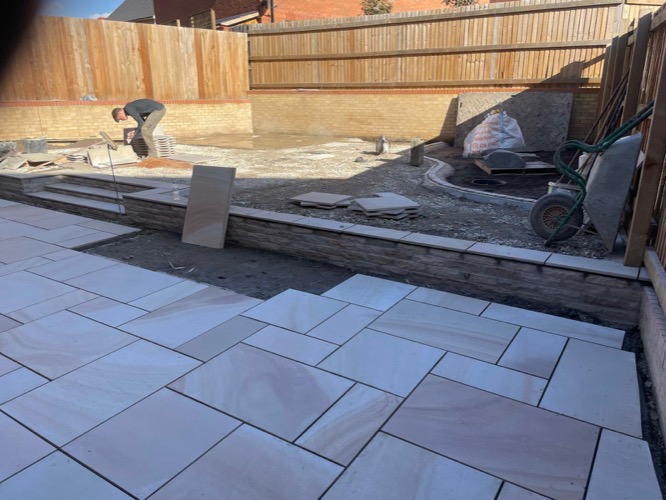
Porcelain garden paving ashton in makerfield
Porcelain garden paving slabs helsby

Keeping Your Garden Porcelain Paving Looking Its Best

One of the biggest advantages of garden porcelain paving is how little ongoing maintenance it needs compared with natural stone or concrete. A regular sweep to remove leaves and debris, followed by an occasional wash with a mild, pH-neutral detergent and a soft brush, is generally enough to keep porcelain tiles garden paving looking as good as the day it was laid. Because the surface doesn’t need sealing, you avoid the recurring cost and effort that comes with maintaining natural stone garden paving, leaving more time to actually enjoy the space.

Jointing compound does most of the long-term work here. A properly filled, well-compacted joint keeps water out of the bedding layer and stops weed growth taking hold between slabs, which is the usual reason older patios start to look tired. Checking joints once a year and topping up any that have opened takes very little time.

  • Sweep regularly to clear leaves and organic debris
  • Wash occasionally with mild detergent and water
  • Check and top up joints annually
  • No sealing required, unlike natural stone

Start Your Garden Transformation

Give your outdoor space a durable, stylish upgrade with porcelain tiles garden paving from Bluebell Landscapes. From initial design advice through to expert installation, we handle every stage of your garden porcelain paving project. Get in touch today for a tailored garden paving quote.

How much does porcelain paving cost?2026-08-03T08:38:20+00:00

UK porcelain paving typically costs £30–£70 per m² for standard ranges and £70–£120+ per m² for premium ranges, with labour adding roughly £80–£120 per m². Since garden size, access, and ground conditions all affect the final figure, Bluebell Landscapes provides a tailored quote based on your specific space rather than a flat rate.tilesandsmilesBluebell-Landscapes.csv

What is the cost of porcelain paving?2026-08-03T08:38:20+00:00

Combined material and labour costs for porcelain paving generally fall between £70 and £190+ per m², depending on slab quality and site preparation. A firm price depends entirely on your garden’s size and condition, which is why every Bluebell Landscapes quote is based on a proper site assessment.pavingshopper+1Bluebell-Landscapes.csv

What is porcelain paving cost per m2?2026-08-03T08:38:20+00:00

Material-only porcelain slabs cost roughly £20–£100 per m² in the UK, with supply-and-fit projects typically landing between £70 and £190+ per m² once labour is included. This range varies widely with groundwork needs, so a genuine per-m² figure for your project comes from a site visit.royalestones.co+1Bluebell-Landscapes.csv

What is the porcelain paving price per m2?2026-08-03T08:38:20+00:00

Porcelain paving price per m² ranges from around £19.55 at the budget end through to £120+ for premium finishes, largely driven by slab thickness, size, and origin. Because every garden differs, Bluebell Landscapes calculates price per m² individually after seeing the space.universalpaving.co+1Bluebell-Landscapes.csv

How much does it cost to lay porcelain paving?2026-08-03T08:38:20+00:00

Labour to lay porcelain paving in the UK typically costs £80–£120 per m² on top of material costs, reflecting the specialist sub-base and jointing work involved. Ground preparation complexity varies from garden to garden, so Bluebell Landscapes prices labour after assessing your site.Bluebell-Landscapes.csvtilesandsmiles

How much does a porcelain patio cost?2026-08-03T08:38:20+00:00

A typical 20m² porcelain patio costs roughly £2,400–£4,400 in total once materials and labour are combined, though this shifts with slab choice and site conditions. Patio shape, size, and existing ground conditions all affect the final price, so Bluebell Landscapes quotes each patio individually.tilesandsmilesBluebell-Landscapes.csv

What is the cost of a porcelain patio?2026-08-03T08:38:20+00:00

Total porcelain patio costs in the UK generally range from £110–£190+ per m² supply-and-fit, varying by tile quality and preparation needs. As no two patios are the same size, Bluebell Landscapes provides a bespoke figure after visiting your garden.pavingshopper+1Bluebell-Landscapes.csv

What is porcelain patio cost per m2?2026-08-03T08:38:20+00:00

Porcelain patios typically cost £110–£190+ per m² installed in the UK, with premium finishes pushing costs higher. This depends heavily on patio size and groundwork, so Bluebell Landscapes assesses each project individually.Bluebell-Landscapes.csvtilesandsmiles+1

How much does a porcelain driveway cost?2026-08-03T08:38:20+00:00

Porcelain driveways generally cost more per m² than patios because they need a stronger sub-base to support vehicle weight, with material prices starting around £20–£100 per m² before labour. Driveway size and current surface condition vary significantly between properties, so Bluebell Landscapes tailors a quote to each driveway.royalestones.coBluebell-Landscapes.csv

How much do porcelain pavers cost?2026-08-03T08:38:20+00:00

Outdoor porcelain pavers cost roughly £20–£100 per m² for materials in the UK, with total installed cost often reaching £70–£190+ per m² once labour is added. Given how much this depends on your outdoor space, Bluebell Landscapes provides a project-specific quote.royalestones.co+1Bluebell-Landscapes.csv

What is the cost of porcelain pavers?2026-08-03T08:38:20+00:00

Porcelain paver costs vary by slab thickness, finish, and the groundwork your space requires, generally landing between £70 and £190+ per m² installed. An accurate figure depends on your garden’s size and layout, best confirmed on-site.pavingshopperBluebell-Landscapes.csv

What is porcelain pavers price?2026-08-03T08:38:20+00:00

Porcelain paver prices range from about £20 per m² for budget material-only options up to £120+ per m² for premium ranges. Bluebell Landscapes quotes based on your specific project rather than a generic rate.universalpaving.co+1Bluebell-Landscapes.csv

What is porcelain pavers cost per square foot?2026-08-03T08:38:20+00:00

Converting UK per-m² pricing, porcelain pavers cost roughly £2–£11 per square foot for materials, translating to about £6.50–£17.60 per square foot installed. Because pricing depends on total area and site prep, Bluebell Landscapes calculates this after seeing your garden.Bluebell-Landscapes.csvpavingshopper

What is the best price for porcelain paving?2026-08-03T08:38:20+00:00

The best price comes from comparing full supply-and-fit quotes rather than material cost alone, since installation quality significantly affects long-term durability. Bluebell Landscapes provides a complete, itemised quote so you can see exactly what’s included.londonstone.coBluebell-Landscapes.csv

What are porcelain paving prices?2026-08-03T08:38:20+00:00

Porcelain paving prices in the UK span from around £19.55 per m² at the budget end to £120+ per m² for premium ranges, plus £80–£120 per m² labour. Since prices vary by project, Bluebell Landscapes assesses your garden before confirming a figure.universalpaving.co+1Bluebell-Landscapes.csv

How do you lay porcelain slabs?2026-08-03T08:38:20+00:00

Porcelain slabs are typically laid on a full mortar bed or specialist adhesive over a properly prepared sub-base, with joint spacing of 3–10mm recommended for outdoor use. Professional installation is strongly recommended over DIY, since incorrect sub-base preparation is one of the most common causes of later problems.naturalstoneandtimber

Is a porcelain paving installer necessary, or can it be a DIY job?2026-08-03T08:38:20+00:00

While it’s possible to lay porcelain paving yourself, manufacturers generally recommend professional installation due to the precision needed in sub-base preparation and jointing. A qualified installer like Bluebell Landscapes ensures the groundwork, drainage falls, and joint spacing meet manufacturer specifications for long-term performance.milesstone.coBluebell-Landscapes.csv

Is porcelain paving slippery?2026-08-03T08:38:20+00:00

Outdoor porcelain paving is manufactured with anti-slip textured surfaces rated using the R-value system (R9 to R13), making it less slippery than many other paving materials when properly specified. This makes it a safe choice for the UK’s wet climate, including around pools and high-traffic patio areas.rubi

Does porcelain paving scratch or stain?2026-08-03T08:38:20+00:00

Porcelain paving is highly resistant to scratching and staining due to its dense, non-porous surface, which prevents spills and dirt from penetrating the material. This also means it resists mould and mildew, keeping patios looking newer for longer with minimal cleaning.rubi

Can porcelain paving withstand UK weather?2026-08-03T08:38:20+00:00

Yes — porcelain paving is frost-resistant, UV-resistant, and handles thermal expansion well, making it well-suited to the UK’s mix of rain, frost, and occasional heat. Its low water absorption rate (under 0.5%) prevents the freeze-thaw cracking that can affect other paving materials.

Where we are

Go to Top