
Porcelain Paving
Porcelain paving has become one of the most sought-after paving materials for UK gardens, patios, and outdoor spaces, and for good reason. Homeowners across the Wirral are increasingly choosing porcelain paving over traditional concrete or natural stone because it combines a sleek, modern finish with exceptional durability and minimal upkeep. Bluebell Landscapes supplies and installs a full range of porcelain paving slabs, giving local homeowners a hassle-free route to a beautifully finished outdoor space that stands up to the region’s wet winters and warm summers alike.
What Is Porcelain Paving?
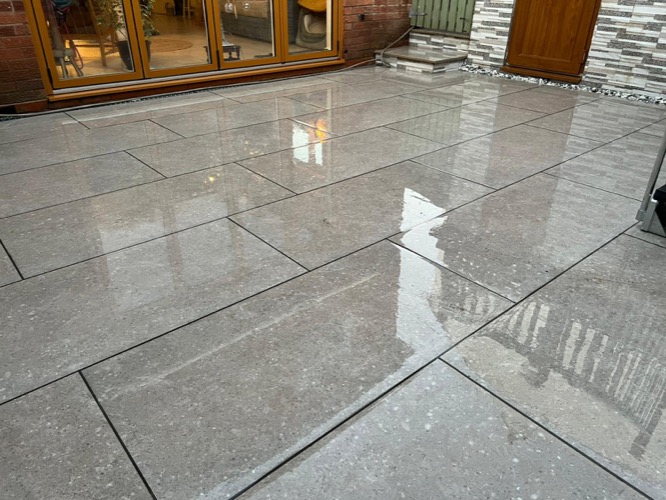
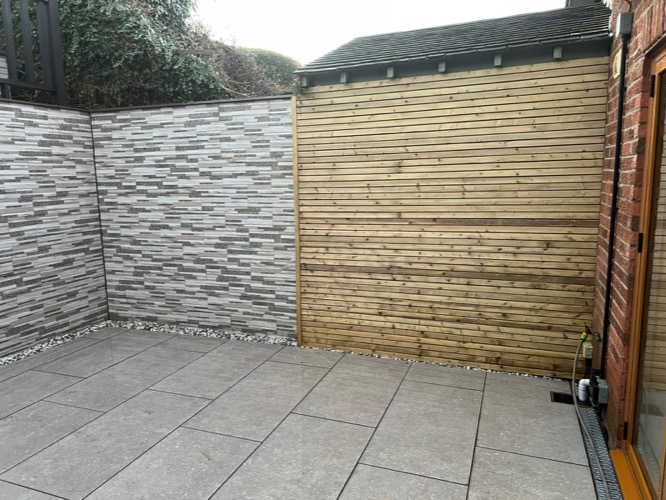
Porcelain paving is a manufactured ceramic material fired at extremely high temperatures, which gives it a dense, virtually non-porous structure unlike natural stone or concrete. This manufacturing process is what sets porcelain paving slabs apart from other outdoor surfaces — the material barely absorbs water, meaning it resists the frost damage, staining, and moss growth that affect more porous materials over time. Outdoor-grade porcelain paving tiles are typically 20mm thick, roughly double the thickness of indoor porcelain tiles, giving them the strength needed to handle foot traffic, garden furniture, and the freeze-thaw cycles of a typical UK winter.
That density is what drives almost every practical advantage. Water absorption below 0.5 per cent means frost cannot penetrate and expand within the slab, colour is fired through rather than applied as a surface coating, and the fired face resists staining from oil, wine, and leaf tannin in a way that untreated stone does not.
- Water absorption typically below 0.5 per cent
- Colour fired through the body, not surface-applied
- Frost-proof in British winters without sealing
- Resists oil, wine and leaf staining
- Consistent thickness for level, even laying
Why Homeowners Are Switching to Porcelain Paving Slabs
Compared with concrete or natural stone, porcelain paving slabs offer a combination of benefits that’s hard to match:
- Exceptional durability — porcelain resists cracking, chipping, and wear far better than concrete, which can deteriorate and crack over time, or natural stone, which is prone to weathering.
- Minimal maintenance — because the surface is non-porous, porcelain paving doesn’t need sealing and resists stains, moss, and mildew, needing little more than an occasional wash with soap and water.
- Frost and UV resistance — porcelain paving tiles hold their colour and structural integrity through UK winters and summers without fading or cracking.
- Design flexibility — porcelain paving stones are available in an enormous range of colours, textures, and finishes, including realistic stone, slate, and wood-effect designs that would be far more expensive to achieve in natural materials.
- Lightweight and precise — porcelain slabs are lighter than natural stone equivalents, which makes them easier to handle and install to a more consistent, precise finish.
A common question homeowners ask is whether porcelain paving is safe underfoot when wet. Outdoor porcelain paving is manufactured with textured, slip-resistant surfaces and rated using the Pendulum Test Value (PTV) and R-value systems — many outdoor ranges achieve R10 or R11 ratings, offering strong slip resistance even in wet conditions typical of the Wirral’s climate. This makes porcelain paving tiles a sound choice for patios, paths, and areas around outdoor seating where safety matters just as much as appearance.
How Porcelain Paving Slabs Are Installed
Getting the best long-term performance from porcelain paving slabs depends heavily on correct installation, and this is where a professional, experienced team makes the real difference. The process typically involves several carefully managed stages:
- Excavation — the area is dug out to a depth that allows for both the sub-base and the paving itself, generally at least 150mm below the finished patio height.
- Sub-base preparation — a compacted layer of Type 1 MOT aggregate is laid and levelled to provide a strong, stable foundation, with a slight fall built in (roughly 15mm per metre) to ensure proper drainage.
- Bedding and laying — the porcelain paving tiles are laid onto a full mortar bed or specialist adhesive, checked continuously with a spirit level to maintain a consistent, even surface.
- Jointing — joints between paving porcelain slabs are typically spaced 3–10mm apart and finished with grout or jointing compound, giving a clean, professional finish.
Skipping or rushing any of these stages is one of the most common causes of problems with porcelain paving further down the line, from uneven surfaces to drainage issues and cracked tiles. This is why Bluebell Landscapes manages every step in-house, from initial site assessment through to the finished, precision-laid result — ensuring your paving porcelain slabs perform exactly as they should for decades to come.
Porcelain Paving vs Traditional Materials
When weighing up porcelain paving tiles against concrete or natural stone, the comparison generally comes down to long-term value rather than upfront cost alone. Concrete is typically cheaper initially but more prone to cracking and staining over time, while natural stone offers a beautiful, organic look but requires ongoing sealing and maintenance to prevent staining and moss growth. Porcelain paving stones sit in between on upfront cost but often work out more cost-effective over the lifetime of the surface, since the reduced maintenance and superior durability mean fewer repairs and replacements down the line.
Natural stone brings genuine character but arrives with variable thickness, needs sealing on installation and periodically afterwards, and darkens unevenly as it weathers. Porcelain gives up some of that natural variation in exchange for dimensional consistency and a surface that looks the same in year ten as it did in year one.
Choosing the Right Porcelain Paving for Your Garden
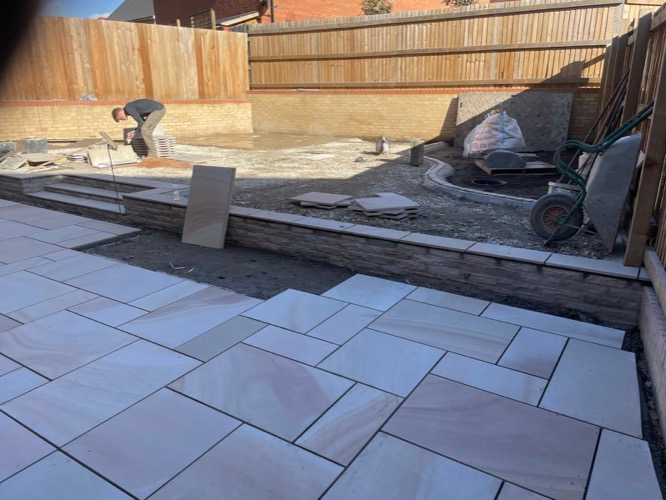
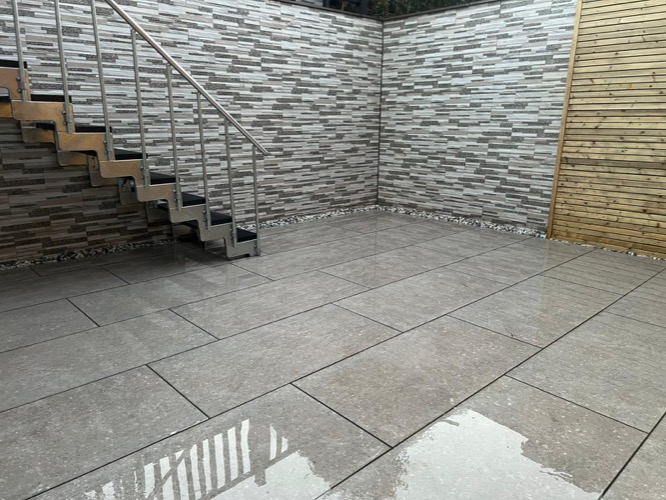
With such a wide range of porcelain paving slabs available, from classic greys and warm beiges to bold anthracite tones, choosing the right option depends on your garden’s existing colour palette, the style of your home, and how the space will be used. Bluebell Landscapes talks through these options with every customer, helping you choose porcelain paving tiles that will complement your garden both now and as planting and outdoor features change over the years.
Format matters as much as colour. Large-format slabs reduce the number of joint lines and make a modest garden read as more open, while smaller units suit intricate layouts and curved edges. It is worth viewing samples outdoors in daylight rather than judging from a brochure, since colour shifts noticeably between indoor lighting and natural light.
Get Your Porcelain Paving Quote
Porcelain paving offers a rare combination of style, strength, and low maintenance that’s well suited to the Wirral’s climate and the demands of everyday garden use. Whether you’re planning a full garden transformation or simply want to replace a tired existing patio, Bluebell Landscapes provides expert supply and installation of porcelain paving slabs tailored to your space. Contact us today for a free, no-obligation site visit and quote.
—
Services
- Porcelain Paving
- Porcelain Tiles Garden
- Porcelain Patio Tiles
- Grey Porcelain Paving
- Porcelain Driveway
- Porcelain Paving Near Me
- Anthracite Porcelain Paving
- White Porcelain Paving
- Beige Porcelain Paving
- Porcelain Outdoor Slabs
- Pattern Imprinted Concrete
- Landscape Gardener
- Garden Designer
- Landscape Gardener Near Me